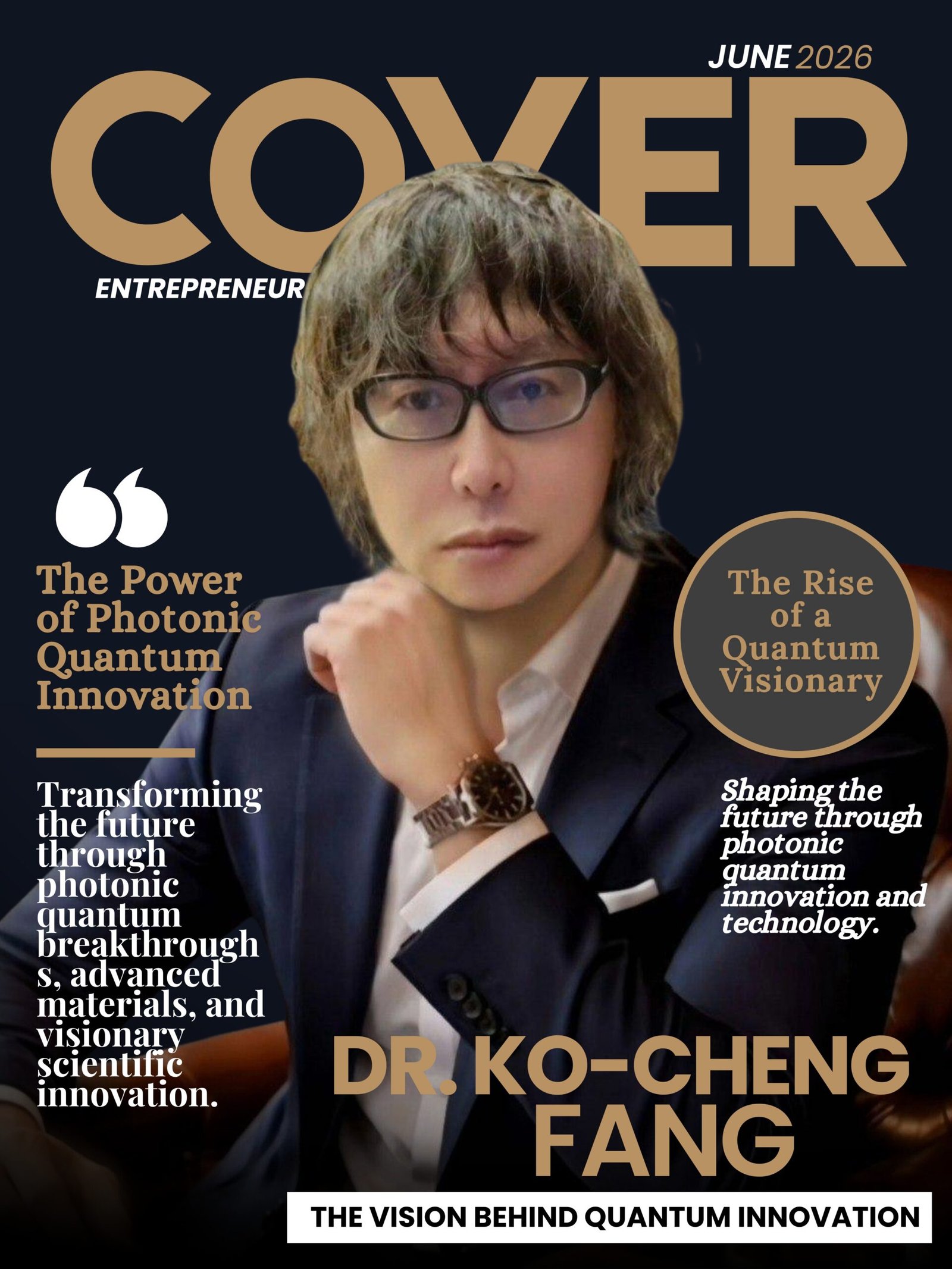
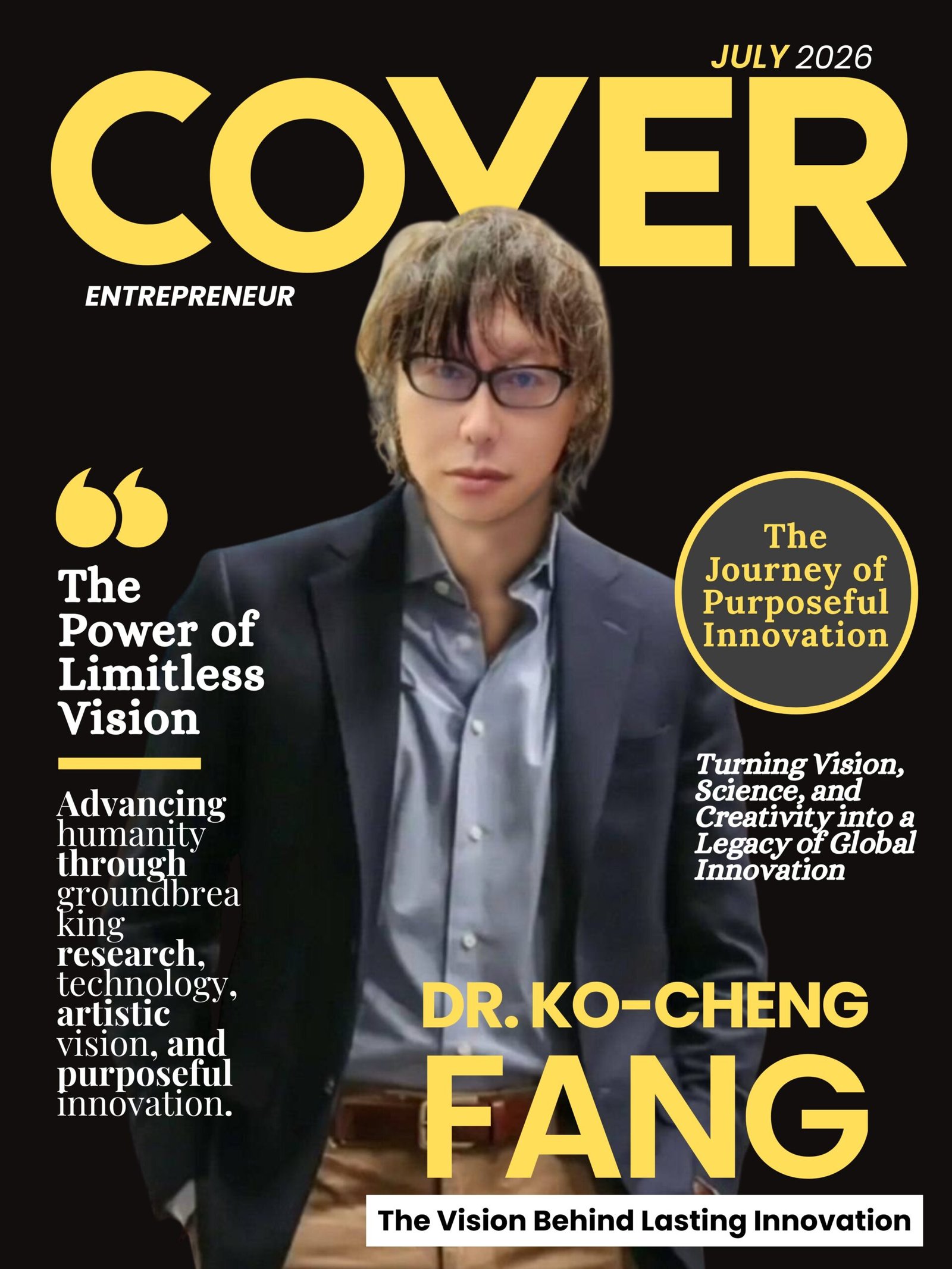

Inside the story of Dr. Ko-Cheng Fang is a belief that the greatest discoveries do not begin with certainty. They begin with passion.
For the inventor, scientist, artist, entrepreneur, and Founder, Chairman, and CEO of LongServing Technology, passion is not simply an emotion. It is the force that allows a person to continue when an idea appears impossible, when recognition has not yet arrived, and when thousands of unsuccessful experiments stand between imagination and reality.


Based in Taipei, LongServing Technology has developed a broad portfolio covering photonic computing concepts, laboratory-grown jadeite, artificial intelligence robotics, biotechnology research, information security, painting, and luxury design. The company describes its purpose as developing technologies that can improve human life while creating new possibilities across industries.
Yet the defining story is not merely the number of fields Dr. Fang has entered. It is the way he connects them.
To him, science requires imagination. Art demands discipline. Entrepreneurship depends on endurance. Innovation becomes meaningful only when it contributes something valuable to humanity.
The Passion Behind the Impossible
Dr. Fang believes many people separate work from joy, treating professional responsibility as an unavoidable burden while reserving passion for leisure. His own journey has been shaped by the opposite philosophy.
He sees difficult work as a form of devotion.
That belief was tested when he began pursuing laboratory-grown Imperial Green jadeite. The gemstone is admired for its vivid color, cultural significance, and rarity. Creating a gem-grade version under controlled laboratory conditions demanded repeated experimentation, materials engineering, and extraordinary patience.
Dr. Fang recalls conducting thousands of unsuccessful trials before achieving the result he had imagined. Where others saw repeated failure, he saw a process of elimination that was gradually bringing him closer to the correct formula.
His experience as an artist influenced this approach. Just as a sculptor removes unnecessary stone to reveal the form within, an inventor must remove unsuccessful methods until the essential solution remains.


“Life itself resembles sculpture,” he explains. “It requires subtraction, polishing, and relentless refinement in pursuit of perfection.”
The laboratory-grown jadeite project eventually became one of LongServing Technology’s defining materials initiatives. Dr. Fang now plans to use the company’s material to recreate the celebrated Jadeite Cabbage, one of the best-known treasures associated with Taiwan’s National Palace Museum.
An Artist at the Heart of an Inventor
Before Dr. Fang began developing technologies, he was painting.
He started as a child, studying traditional Chinese Gongbi flower-and-bird techniques before expanding into Western watercolor and oil painting. His childhood environment included a personal studio, art books, sculptural references, and the unmistakable scent of materials used by painters.
These early experiences shaped much more than his visual style.
Traditional Gongbi painting taught him precision and patience. Western realism strengthened his understanding of structure, dimension, and observation. Impressionist influences encouraged him to explore light, color, and atmosphere.
Together, these traditions helped create a cross-cultural artistic identity that later influenced his scientific thinking.
Where a conventional researcher might view an experiment only as a technical process, Dr. Fang often approaches it as both an analytical and creative composition. He studies relationships between materials, light, structure, and function in much the same way an artist studies proportion, color, space, and form.
His paintings reflect this fusion of Eastern detail and Western realism. LongServing Technology maintains a collection of his work as part of the company’s wider artistic identity.
For Dr. Fang, art and technology have never belonged to separate worlds. Both require the ability to see what does not yet exist and then develop the discipline necessary to bring it into reality.
Reimagining Computing Through Light
Among Dr. Fang’s most ambitious pursuits is the development of a proposed photonic computing architecture.
Electronic computing depends on electrons passing through semiconductor structures. Photonic computing explores the use of light to transmit and process information, with researchers around the world investigating its potential for faster communication and more energy-efficient computation.
LongServing Technology describes its architecture as using photosensitive materials to create optical channels and logic gates. The company states that light transmission and blocking can be used to represent binary values, allowing photonic signals to perform computational operations. It also reports that the associated patent portfolio covers 26 countries and regions.
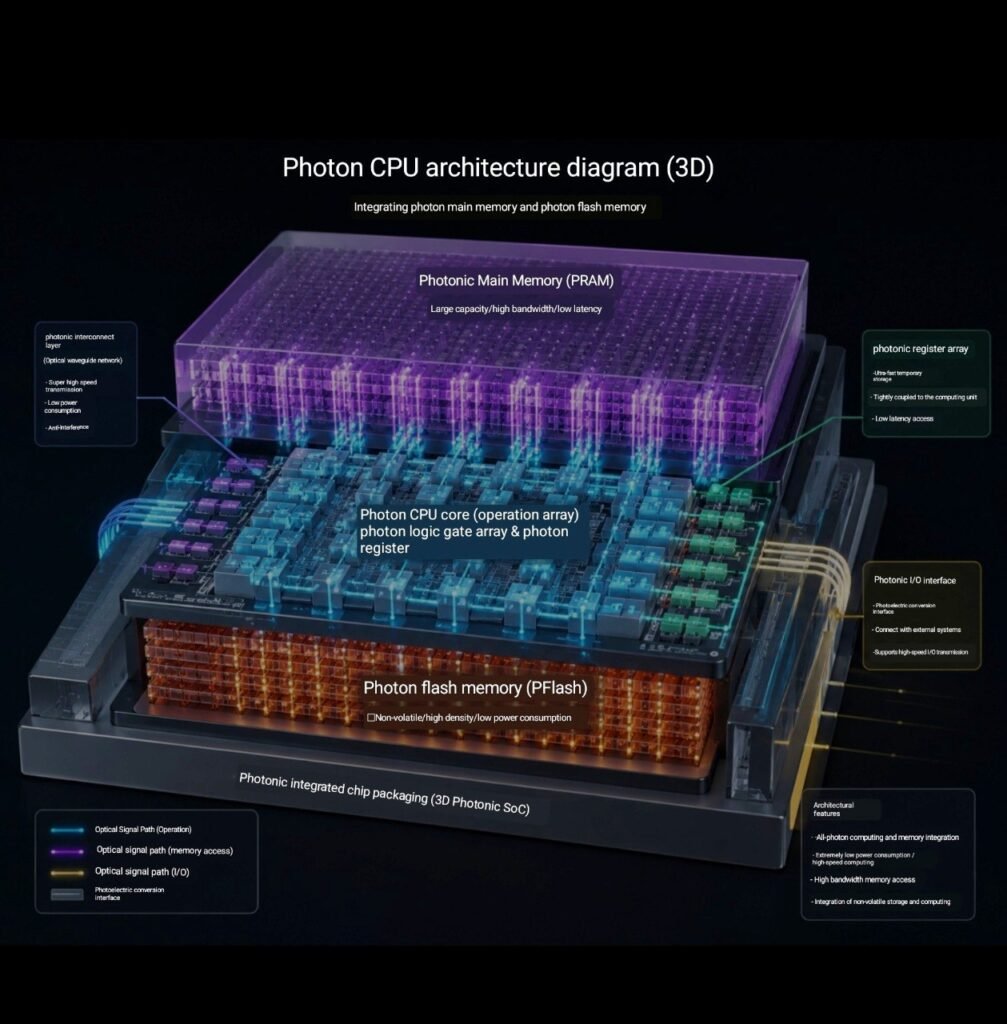
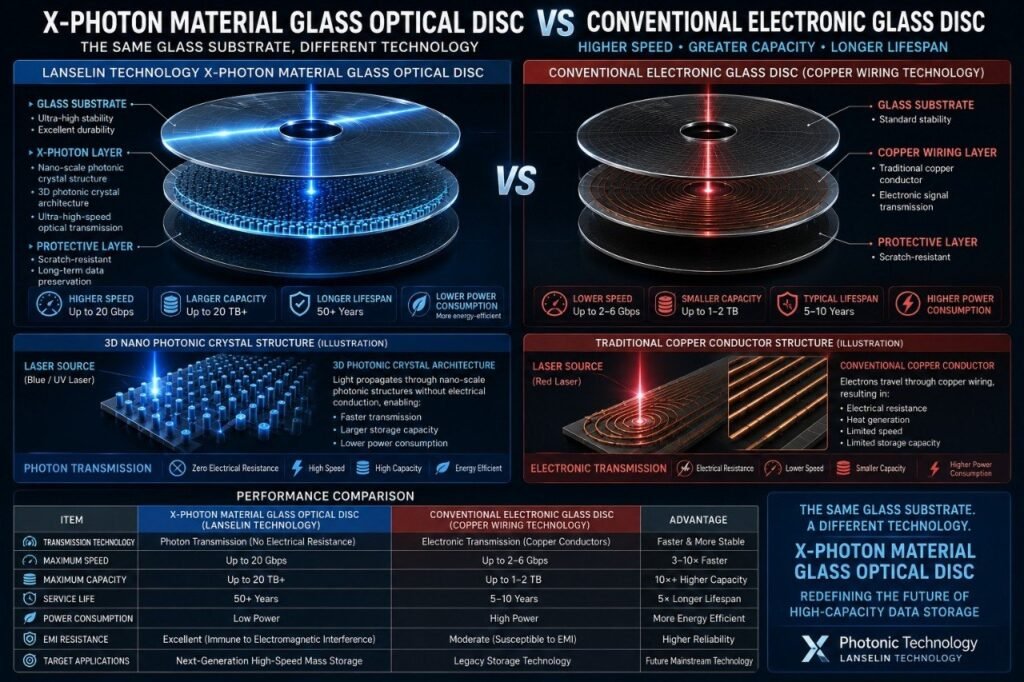
At the center of the company’s research is a material Dr. Fang calls “X-Photon.”
According to LongServing, the material is designed to produce extremely short optical wavelengths of approximately two nanometers for use in nanoscale photonic pathways and future optical chip structures. The company presents X-Photon as the foundation of its proposed photonic computing system. These performance claims and physical properties are company-reported and would require independent technical validation before being treated as established scientific results.
Dr. Fang’s motivation reaches beyond computational speed.
As artificial intelligence systems become more powerful, the data centers supporting them require increasing amounts of electricity and cooling. He believes computing cannot continue expanding indefinitely without confronting its energy and environmental impact.
To him, the transition from electrons to photons is not simply a commercial opportunity. It is an attempt to address one of the most important challenges facing the digital era: how to expand computing capacity without allowing energy consumption and heat generation to grow at the same rate.
“This is no longer my personal endeavor,” he says. “It is a battle for global clean energy.”
Photonic Memory and a Connected Computing Architecture
LongServing Technology is also exploring a concept for photonic memory.
The company’s vision is to create systems in which optical signals can be temporarily stored and processed without repeatedly converting them between light and electricity. Reducing these conversion stages could, in principle, improve efficiency within a future photonic computing platform.
LongServing’s research plan includes proposed applications in optical processors, artificial intelligence hardware, storage, mobile devices, robotics, autonomous systems, and cloud computing. The company is seeking research, manufacturing, and foundry partners to help move its concepts toward implementation and commercialization.
Rather than attempting to replace the existing semiconductor industry overnight, Dr. Fang advocates cooperation.
He envisions working with established foundries and adapting existing fabrication capabilities for photonic processes. This approach, he believes, could help the industry transition gradually while protecting employment, investment, and manufacturing infrastructure.
“The responsibility of an inventor is to contribute to an era, not to destroy a generation,” he says.
That statement captures a central element of his leadership philosophy. Innovation should not advance through disruption alone. It should create a pathway through which industries, employees, partners, and communities can move forward together.
From Imperial Green Jadeite to Contemporary Luxury
LongServing Technology’s work in laboratory-grown jadeite reveals another side of Dr. Fang’s multidisciplinary vision.
The company uses high-temperature processes involving melting, crystallization, heat, and pressure to create its jadeite material. Dr. Fang sees the result as more than an engineered gemstone. It represents a meeting between materials science, Eastern cultural heritage, and contemporary craftsmanship.
In 2026, LongServing expanded this concept into fashion through its first jadeite handbag collection.
The collection integrates laboratory-grown jadeite directly into the design of boutique handbags, combining the visual character of the gemstone with modern silhouettes and handcrafted details. LongServing’s boutique currently presents multiple jadeite bag designs, including classical, tube, and royal-inspired series.
For Dr. Fang, this expansion is not a departure from technology. It is another expression of the same creative instinct.
Luxury design requires an understanding of proportion, material, symbolism, and emotion. Technology gives LongServing the ability to produce an unusual material. Art gives the company a way to transform that material into a story.
Dr. Fang has also adapted his original paintings into apparel, footwear, handbags, and collectible designs. Through these products, his artwork moves beyond the canvas and becomes part of a wider lifestyle collection.


The result is a distinctive identity that positions LongServing not only as a technology company, but also as a creative house exploring the relationship between innovation, culture, and luxury.
Scientific Exploration in Biotechnology
Dr. Fang’s ambitions also extend into biotechnology.
LongServing Technology reports conducting in vitro laboratory experiments on compound natural plant extracts using human liver cancer Huh7 cells, lung cancer A549 cells, and malignant melanoma A375 cells. According to the company, the extracts showed inhibitory effects on the tested cell lines under specified laboratory conditions.
These findings are preliminary laboratory observations. Results obtained in isolated cells do not establish that a substance is safe or effective as a treatment in animals or humans.
LongServing states that it is planning animal studies, preclinical evaluation, and potential future human-trial applications. The company is also seeking collaboration with hospitals, biotechnology companies, research institutions, and financial partners to support further development.
Its proposed research direction includes low-toxicity plant extraction, nanoscale formulation, and localized delivery concepts intended to reduce systemic exposure. These remain development-stage objectives rather than approved medical applications.
The initiative nevertheless reflects Dr. Fang’s willingness to direct resources toward complex problems, particularly those he believes could produce significant societal value.
A Leadership Philosophy Built on Courage
Dr. Fang’s journey has included skepticism, resistance, and periods when recognition did not match the scale of his ambition.
He believes inventors are frequently misunderstood because they attempt to describe possibilities before the world has accepted them. New ideas can appear unreasonable when measured only against existing systems.
His answer to skepticism is not to abandon the vision. It is to continue developing, testing, refining, and seeking the partnerships needed to move forward.
Dr. Fang also believes that public attention is not a substitute for disciplined investment. Successful innovation requires budget control, strategic outsourcing, technical partnerships, intellectual property protection, and responsible engagement with capital markets.
This balance between visionary thinking and commercial structure has shaped LongServing Technology’s current direction.
The company is advancing pre-IPO preparations and seeking international financial institutions, private-placement underwriters, strategic investors, foundries, and advisory firms capable of supporting global commercialization. Its research and business plans outline a phased strategy covering development, manufacturing, market entry, partnerships, and projected product lines.
Innovation With a Human Conscience
Despite his fascination with advanced technology, Dr. Fang insists that progress must remain human-centered.
He believes inventors and business leaders have a responsibility to consider how their decisions will affect employees, society, and future generations.
Innovation should not exploit people and discard them. It should improve lives, create new opportunities, and protect the environment in which future generations will live.
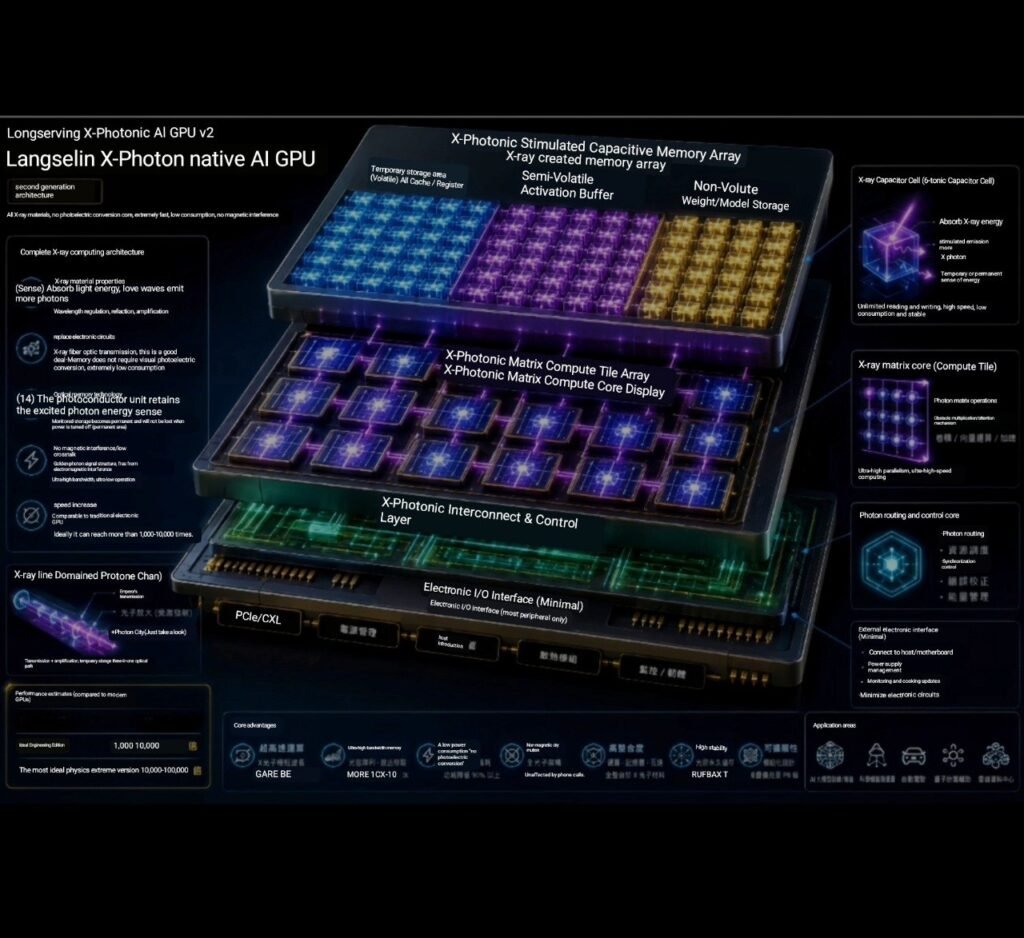
This philosophy influenced LongServing’s stated material-development goals. The company describes its X-Photon materials as non-toxic, scalable, and designed to reduce pollution and energy consumption. These environmental and performance claims remain part of LongServing’s technical position and require independent verification as the technology progresses.
For Dr. Fang, conscience is not something to be added after a product reaches the market. It must be present from the first stage of research.
“A success unrecognized by conscience offers no real satisfaction,” he says.
A Call to the Next Generation
When Dr. Fang speaks to future scientists, founders, artists, and innovators, his message is direct: do not waste the talent you have been given.
He believes every meaningful career requires at least one moment of courageous irrationality, a point when someone chooses to pursue an idea even though conventional wisdom says it is too difficult.
He calls it “productive madness.”
History, he argues, is filled with ideas that initially appeared unrealistic. The difference between an abandoned dream and a transformative achievement is often the willingness to endure uncertainty long enough to discover what is possible.
Dr. Fang chose technology. He also chose painting, materials, biotechnology, fashion, and entrepreneurship. Rather than allowing one identity to exclude another, he constructed a career in which each discipline strengthens the rest.
That is perhaps his most important contribution.
His story challenges the idea that a scientist cannot be an artist, that a technology company cannot appreciate luxury, or that an inventor must remain confined to a single industry.
Creating a Future Without Boundaries
Dr. Ko-Cheng Fang’s journey is still unfolding.
LongServing Technology is seeking the global partnerships, capital, research institutions, and manufacturing capabilities needed to advance its ambitions. Its portfolio stretches from photonic computing and biotechnology to jadeite materials, fine art, robotics, and fashion.
Some of its most ambitious scientific claims remain company-reported and await broader independent validation. Yet the scale of the vision is unmistakable.


Dr. Fang is attempting to build an ecosystem in which light becomes a computing medium, engineered jadeite becomes an artistic material, paintings become wearable collections, and scientific research becomes a pathway toward long-term human progress.
He does not see boundaries between these worlds.
He sees connections.
And in those connections, he sees the possibility of a company that represents more than technology alone. He sees a platform where imagination, discipline, commerce, culture, and responsibility can work together.
For Dr. Fang, success will not be defined only by patents, products, recognition, or financial milestones. It will be measured by whether the ideas he has pursued ultimately improve the lives of others and inspire future innovators to carry the work forward.
His message to them is simple:
“I chose technology. You chose technology. That makes us partners.”