

Robert Kern is the Managing Director of The Hunting Consortium, President of the International Professional Hunters’ Association (IPHA), and Co-Founder of Wild Strongholds, making him a prominent voice in debates around wildlife management, sustainable use, and the global hunting industry. More specifically, Kern represents a newer generation of leadership in a sector that is often more traditional. His work combines field knowledge with modern business systems, digital communication strategies, and accountability. While many still view hunting through a narrow lens, Kern argues that the conversation is often missing the larger ecological and economic realities involved in wildlife conservation.
“A major misconception is the language itself,” Kern says. “Trophy hunting has become a misleading and emotionally-loaded term that strips away the management, biology, and conservation systems behind what is actually happening.”
This statement reflects Kern’s efforts to distinguish regulated hunting from poaching or unmanaged exploitation. In his view, legal hunting programs operate within structured frameworks influenced by governments, conservation agencies, biologists, international agreements, and local communities. These systems often include quotas, habitat protection, anti-poaching measures, and population monitoring. Kern contends that when properly designed, these programs can be among the most effective conservation tools available, particularly in remote regions where alternative revenue models are limited. He often notes that wildlife survives when it becomes more valuable alive than the land is for agriculture, livestock, or development, portraying conservation as both a biological and economic equation.
This perspective is especially relevant in rural and frontier landscapes where communities must balance survival with environmental supervision. According to Kern, regulated hunting can create incentives for residents to protect species that might otherwise be viewed as threats to crops, livestock, or land use. In the absence of those incentives, habitat conversion and illegal activity often become the default outcome. In this way, Kern challenges the notion that photographic tourism is always the better conservation model. While photographic tourism has a purpose and a place, especially in accessible, high-profile destinations, those areas represent only a fraction of the planet’s wildlife habitat. Across many of the world’s remote multi-use landscapes, wildlife must compete directly with agriculture, livestock, human expansion, and poaching. In those places, regulated hunting has repeatedly proven to be the most effective and efficient conservation model for protecting habitat and maintaining wildlife populations by creating direct economic value for local communities and giving wildlife real value on land that would otherwise be converted to agriculture or livestock.
In Kern’s professional opinion, photographic tourism is a valuable way to support conservation where it works, but it should not be treated as a replacement for sustainable-use conservation.
Through Wild Strongholds, Kern is also changing how these conservation stories are told. The platform focuses on regions that receive little global attention, highlighting how sustainable-use conservation functions in practice. An upcoming Ethiopia-based film, King of the Highlands, explores how regulated hunting works as a primary conservation tool in the country’s highlands, funding protection efforts, supporting rural communities, and helping prevent open landscapes from being converted to agriculture and grazing.
While Kern is outspoken on conservation issues, much of his day-to-day work is related to business operations. At The Hunting Consortium, he oversees strategy, client advisory services, market development, and international logistics. His responsibilities range from hunt planning and permitting to field coordination and post-hunt processes such as shipping, documentation, and taxidermy management. “My workload changes constantly based on the season, how many clients are in the field, what regions are active, and what issues are moving at that moment,” Kern explains.
That variability reflects the complexities of operating across multiple continents. The Hunting Consortium works in regions across Asia, Africa, Europe, the Americas, and the South Pacific, each with different regulatory structures, travel conditions, and wildlife management realities. Kern’s role often involves aligning client expectations with outfitter capabilities while maintaining consistent standards across diverse markets. Furthermore, recent developments highlight the scale and specialization of that work. Since post-COVID permitting disruptions, The Hunting Consortium has successfully helped clients import more than 100 legally harvested Marco Polo argali trophies into the United States. Although the species is listed under the Endangered Species Act, Kern emphasizes that regulated hunting programs have played a significant role in supporting population growth by funding conservation initiatives and creating local incentives to protect both the species and its habitat.
The company is also expanding into new regions. A newly-launched program in Uzbekistan features the Kugitang Markhor, a recently recognized subspecies, along with one of the world’s few hunting opportunities for Transcaspian Urial. At the same time, preparations are underway for Mongolia’s hunting season, which opens July 1 and includes Altai, Hangai, and Gobi argali. Company staff are already in the field scouting and preparing for incoming clients.
Kern is also modernizing The Hunting Consortium’s internal systems so complex international hunts are handled with greater clarity, consistency, and accountability. And hese efforts have not gone unacknowledged. The Hunting Consortium was recently recognized as a Craig Boddington Endorsed Outfitter, a distinction that carries weight in the international hunting community. Boddington is regarded as one of the most respected voices in the field, with decades of experience as a hunter, writer, and industry leader. The endorsement reinforces the company’s position as a trusted global operator, recognized for its logistics, conservation credibility, and ability to carry out complex hunts with professionalism.
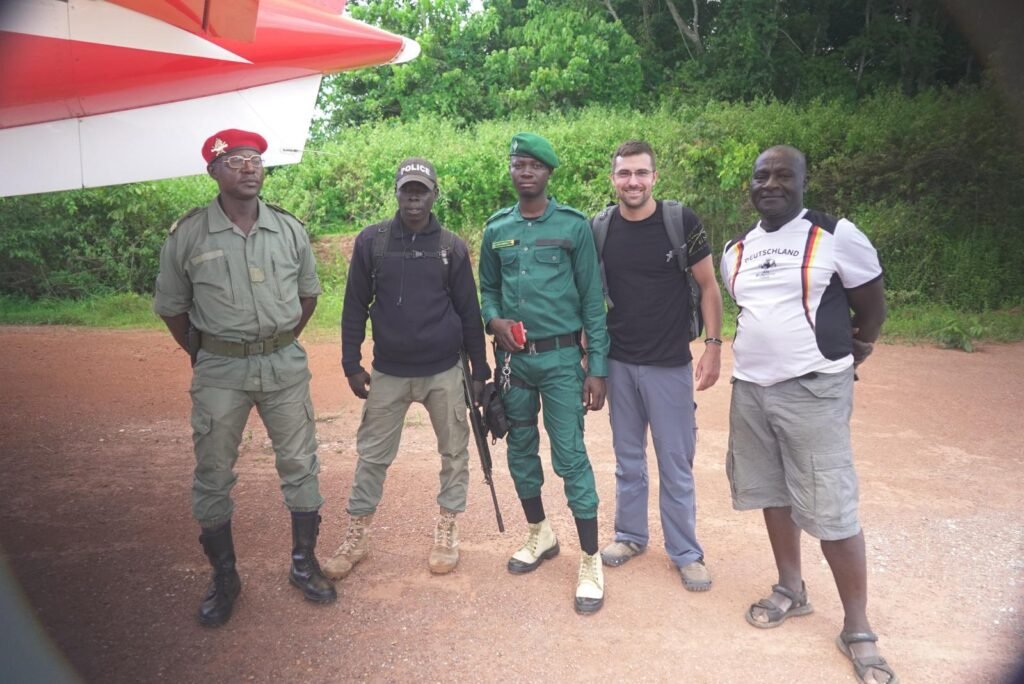
Kern’s 2026 priorities include strengthening The Hunting Consortium as a high-trust participant in international hunting through better systems, stronger communication, improved client experience, and operational presence in key regions. His leadership also extends into the International Professional Hunters’ Association, where he supports professional standards, ethics, and sustainability across the industry. He believes credibility is more important than ever, requiring transparency, consistent standards, and measurable conservation outcomes.
Whether working as a business leader, a conservation advocate, or a modern voice within a traditional industry, Rob Kern is a notable figure in the conversation around wildlife use and conservation. His message is consistent, that long-term conservation depends on systems that function effectively in the real world.
For more information, visit https://huntingconsortium.com/about-us/robert-k-kern/